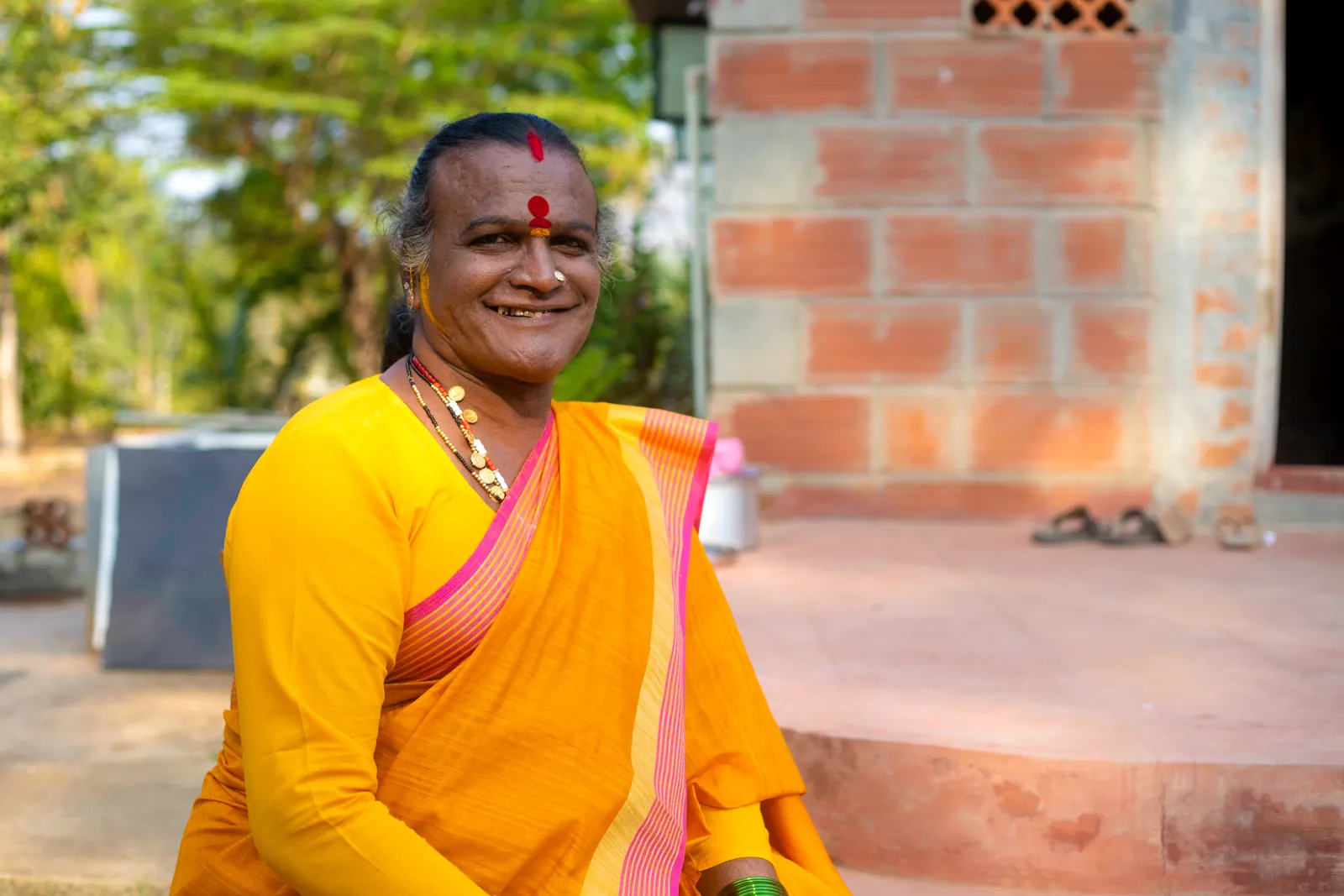
Few life stories embody resilience, courage, and cultural pride as profoundly as that of Matha B. Manjamma Jogathi. Today, she is celebrated across India as a Padma Shri awardee, an acclaimed folk artist, and the first transgender chairperson of the Karnataka Janapada Academy. Yet her journey to national recognition began amid rejection, poverty, discrimination, and unimaginable personal hardship. Manjamma’s life is much more than an inspiring personal success story. It represents the struggle of countless transgender individuals seeking dignity, acceptance, and equal opportunities. Through her unwavering commitment to preserving Karnataka’s traditional Jogathi Nritya, she transformed not only her own destiny but also elevated an art form and an entire community that had long remained invisible. Her story proves that talent, determination, and cultural devotion can overcome even the deepest social barriers.
Growing Up with an Unspoken Identity

Born on May 20, 1957, in Karnataka’s Ballari district, Manjamma was named Manjunatha Shetty and belonged to an Arya Vaishya family. Like many children, her early years appeared ordinary, but as she entered adolescence, she began experiencing emotions and behaviours that distinguished her from other boys. While society expected masculine behaviour, she naturally gravitated towards feminine expression. She enjoyed dressing like girls, participating in cultural performances, and felt increasingly uncomfortable with the identity assigned to her at birth. During her school years, these feelings became stronger, leaving her confused yet unable to suppress who she truly was. Her family struggled to understand these changes. Rather than receiving emotional support, she faced criticism and attempts to force her into traditional gender expectations. The rejection from those closest to her became one of the defining struggles of her youth.
The Difficult Path to Becoming a Jogathi
In northern Karnataka, the Jogathi tradition is deeply associated with the worship of the goddesses Yellamma and Huligemma. Individuals initiated into this tradition dedicate themselves to serving the deity through devotional music, storytelling, and dance. After years of inner conflict and repeated rejection, Manjunatha underwent the Jogathi initiation, symbolically becoming a bride of the goddess. With this ritual came a new identity—Manjamma Jogathi. However, the spiritual transformation also meant losing her place within her family and mainstream society. She was expected to leave home and survive independently, carrying the burden of widespread prejudice against transgender people. Although her parents eventually accepted the ritual itself, they found it difficult to accept their child living openly as a woman. Their changed behaviour left Manjamma emotionally shattered.
A Battle for Survival

The years that followed were among the darkest in her life. Without financial security or family support, Manjamma wandered across towns searching for work. She sold food, performed small jobs, begged on the streets, and struggled to find enough money even for basic necessities. She also became a victim of repeated humiliation and sexual violence, experiences that many transgender persons continue to face due to systemic discrimination. Feeling abandoned and hopeless, Manjamma once attempted to end her life by consuming poison. Fortunately, she survived. Looking back, that moment became the lowest point of her journey—but it also marked the beginning of a remarkable transformation.
Finding Purpose Through Folk Art
Everything changed when experienced Jogathi artists recognised her potential. Senior performers, particularly Kalamma Jogathi, accepted her as a disciple and trained her in the rich traditions of Jogathi music, storytelling, theatre, and dance. For the first time in years, Manjamma discovered a place where her identity was accepted rather than questioned. Folk art became more than a profession—it became her purpose. Under rigorous training, she mastered traditional devotional performances, expressive acting, singing, and the intricate dance techniques associated with Jogathi Nritya. Her performances reflected extraordinary emotional depth. Audiences connected with her powerful storytelling, expressive facial gestures, graceful movements, and spiritual devotion. The stage gradually became the place where society saw her not as an outcast but as an artist.
Keeping Jogathi Nritya Alive


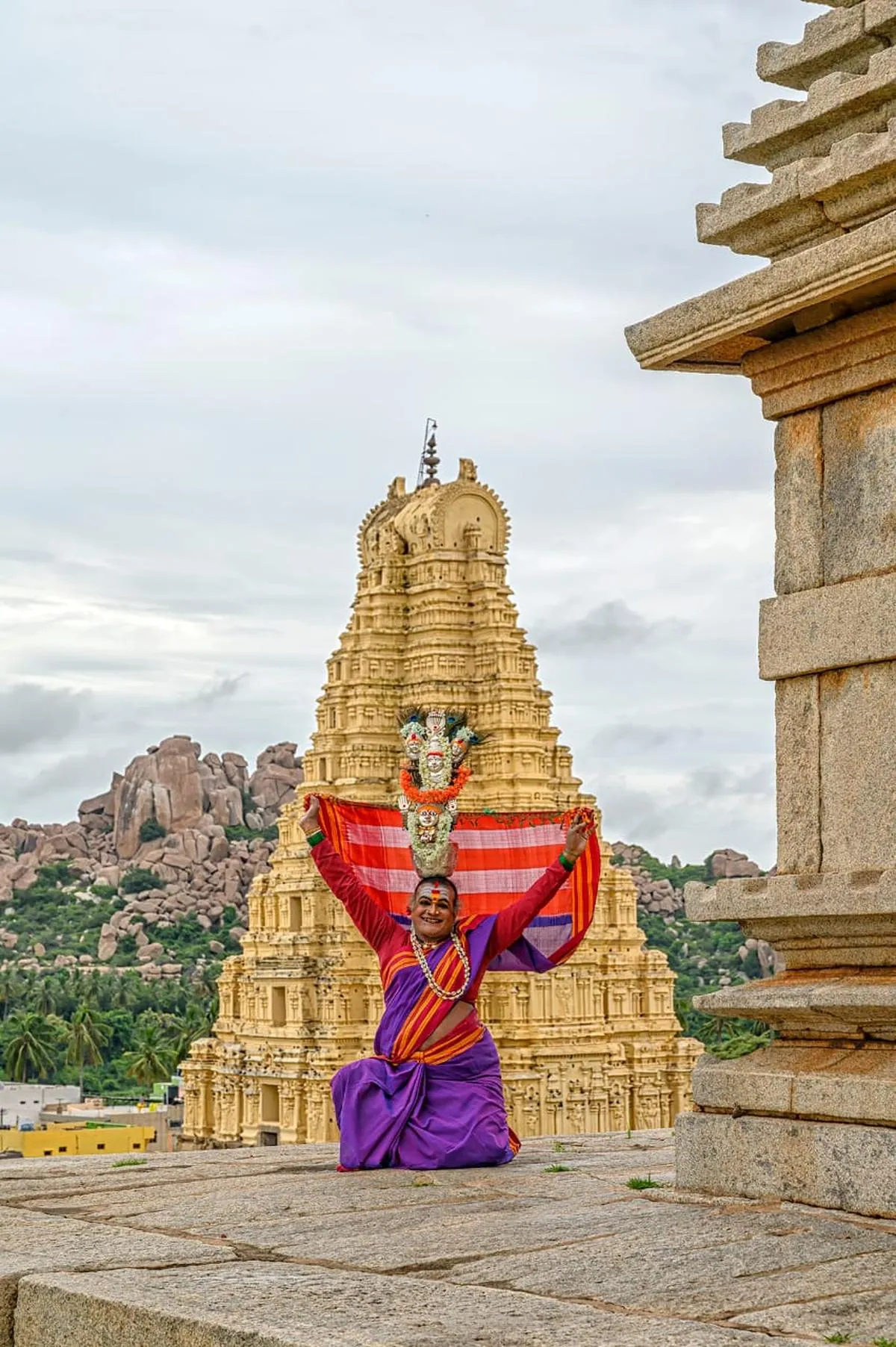
Jogathi Nritya is among Karnataka’s distinctive folk traditions rooted in devotion to Goddess Yellamma. The performances combine music, storytelling, dance, and religious symbolism, preserving centuries-old oral traditions. One of the most striking elements of Manjamma’s performances is balancing a decorated pot carrying the image of Goddess Yellamma while dancing with remarkable poise. Traditional performances are accompanied by instruments such as the choudki, sutti, and taal, creating rhythmic devotional music unique to the Jogathi tradition. As urbanisation spread, many rural folk traditions began disappearing. Manjamma recognised the urgent need to preserve this heritage before it faded from public memory.
She dedicated herself to training younger performers, conducting workshops, performing across Karnataka, and introducing Jogathi Nritya to audiences beyond village festivals. What was once viewed as a marginal folk practice gradually found space on prestigious cultural stages.
Carrying Forward Her Guru’s Legacy
The death of her beloved mentor Kalamma Jogathi deeply affected Manjamma. Rather than allowing the tradition to decline, she accepted the responsibility of leading the troupe and continuing her guru’s lifelong mission. This transition demanded both artistic excellence and organisational leadership. Over the years, she trained numerous students while ensuring that the original spiritual and cultural essence of Jogathi performances remained intact.
Her dedication earned respect not only within folk art circles but also among scholars, cultural organisations, and government institutions working to preserve Karnataka’s heritage.
Recognition Begins to Follow
The defining moment of Manjamma’s public life arrived in 2021, when the Government of India announced her name among the recipients of the Padma Shri, India’s fourth-highest civilian honour.
Years of tireless work slowly began receiving official recognition. In 2010, the Government of Karnataka honoured her with the Karnataka Rajyotsava Award, the state’s second-highest civilian honour. The award recognised her extraordinary contribution to preserving Karnataka’s folk traditions and elevating Jogathi Nritya to mainstream cultural platforms. This recognition marked an important shift. For decades, transgender artists had largely remained invisible despite contributing significantly to traditional arts. Manjamma’s achievement challenged long-held prejudices and demonstrated that artistic excellence transcends gender identity.
A Historic Appointment

In 2019, Manjamma created history by becoming the first transgender chairperson of the Karnataka Janapada Academy. The appointment represented more than personal success. It signified growing institutional recognition of diversity and inclusivity within India’s cultural landscape. As chairperson, she worked to promote Karnataka’s diverse folk traditions, encourage young performers, organise cultural programmes, and strengthen documentation of traditional performing arts.
Her leadership inspired countless members of the transgender community who had never imagined someone like themselves occupying such an influential cultural position
Padma Shri: A Nation Recognises Her Contribution
The defining moment of Manjamma’s public life arrived in 2021, when the Government of India announced her name among the recipients of the Padma Shri, India’s fourth-highest civilian honour. Initially, she reportedly believed the congratulatory phone call was a prank. Only after receiving official confirmation did she realise the nation had recognised her lifelong contribution to Indian folk culture.
At the award ceremony in Rashtrapati Bhavan, Manjamma won hearts across the country with her graceful gesture of blessing President Ram Nath Kovind after receiving the honour. The touching moment quickly went viral on social media and became a symbol of humility, gratitude, and cultural pride. For Manjamma, however, the award was never about individual achievement. She repeatedly described it as recognition for the entire transgender community and for every artist working tirelessly to preserve India’s folk traditions.
Education and Literature Preserve Her Legacy

Manjamma’s extraordinary life has also become part of academic study. Her autobiography, Naduve Suliva Hennu (later published in English as From Manjunath to Manjamma), offers a deeply personal account of gender identity, social exclusion, artistic dedication, and eventual recognition. The memoir has become an important resource for understanding transgender experiences in India through lived reality rather than stereotypes. Her life story has also been incorporated into university curricula, allowing students to learn about gender diversity, folklore, and social inclusion through one of Karnataka’s most inspiring personalities.
Changing Society Through Art
Throughout her career, Manjamma has consistently used art as a medium for social transformation. Her performances communicate themes of devotion, compassion, dignity, women’s empowerment, and human equality. She has repeatedly emphasised that transgender people seek nothing more than respect, opportunity, and acceptance. By teaching younger generations and mentoring aspiring performers, she ensures that Jogathi Nritya continues to evolve while remaining rooted in its traditional foundations. She has also spoken openly about the need to eliminate stigma surrounding transgender individuals, encouraging families to support children expressing different gender identities instead of abandoning them.
An Inspiration Beyond Awards

Today, Manjamma Jogathi stands as one of Karnataka’s most respected cultural ambassadors. Her achievements extend beyond awards, titles, and public recognition. She represents resilience in the face of rejection, hope in the midst of despair, and determination against overwhelming social prejudice. From surviving homelessness and discrimination to becoming a nationally honoured cultural icon, her journey reminds India that true greatness often emerges from extraordinary perseverance. Her life also highlights the power of traditional arts to preserve identity, heal emotional wounds, and build bridges between communities.
For thousands of transgender individuals across India, Manjamma is proof that one’s identity need never limit one’s dreams. For Karnataka, she remains a guardian of folk heritage. For India, she is a symbol of courage, dignity, and cultural pride whose legacy will continue inspiring generations to come.