
The Karnataka Budget 2026 has unveiled an ambitious vision for the state’s technology-driven future, with a strong focus on decentralizing growth, expanding innovation ecosystems, and creating new opportunities beyond Bengaluru. Presenting the state budget for the seventeenth time, Chief Minister Siddaramaiah announced a series of transformative initiatives aimed at strengthening Karnataka’s position as India’s leading technology and innovation destination. Among the most significant announcements was the decision to develop Mysuru as Karnataka’s second major information technology hub, a move designed to reduce pressure on Bengaluru while promoting balanced regional development.
For decades, Bengaluru has served as the technology capital of India, attracting global corporations, startups, research institutions, and skilled professionals from across the world. However, rapid urbanization and increasing pressure on infrastructure have highlighted the need for alternative growth centers within the state. Recognizing this challenge, the Karnataka government has identified Mysuru as the ideal city to complement Bengaluru’s technology ecosystem and support future expansion.


According to the Chief Minister, Mysuru already possesses a strong foundation for growth as an IT destination. The city is home to nearly 100 technology companies and more than 30,000 professionals working across various sectors of the digital economy. With a favorable quality of life, strong educational institutions, excellent connectivity, and comparatively lower operational costs, Mysuru is well-positioned to attract additional investments from both domestic and international technology firms. The government’s decision to formally develop the city as Karnataka’s second IT hub is expected to accelerate job creation, infrastructure development, and economic activity across the region.

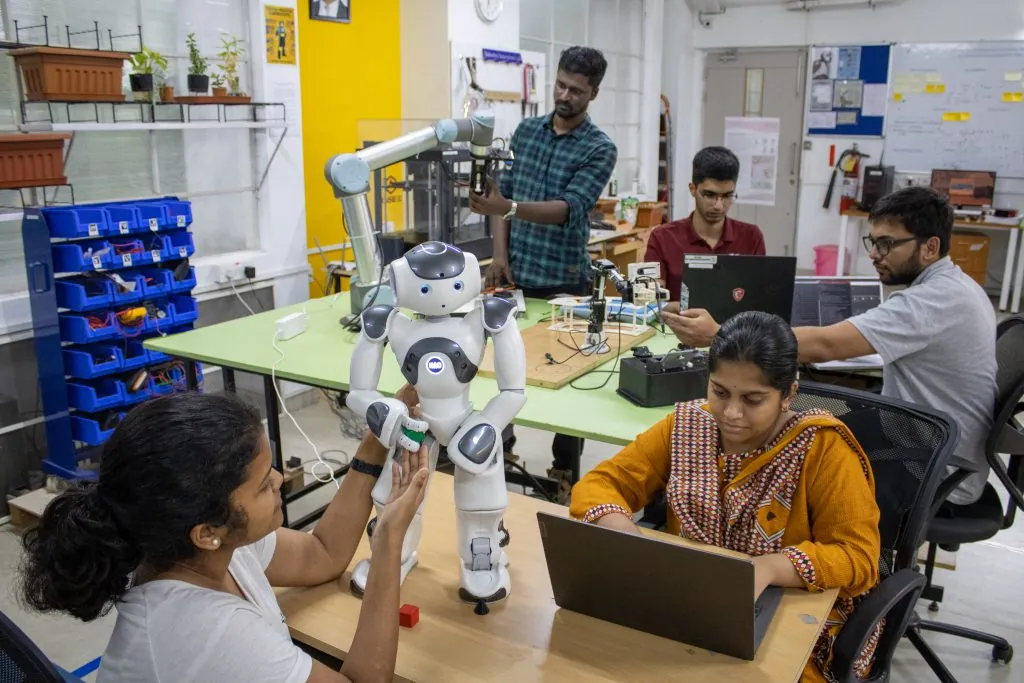
Beyond the expansion of Mysuru’s technology ecosystem, the budget outlines an aggressive strategy to establish Karnataka as a global leader in emerging technologies. One of the flagship initiatives announced is the creation of the Bengaluru Robotics and AI Innovation Zone, popularly referred to as BRAINz. The proposed campus will be established under the leadership of the Indian Institute of Science (IISc) through its Artificial Intelligence and Robotics Technology Park (ART-PARK), in collaboration with the Indian Space Research Organisation (ISRO) and Karnataka State Electronics Development Corporation (Keonics).

The new innovation zone is envisioned as a world-class center for robotics, artificial intelligence, automation, and deep technology research. ART-PARK, established in 2020 within the IISc campus, has already earned recognition as India’s first dedicated artificial intelligence and robotics technology hub. The BRAINz initiative seeks to build on this foundation by fostering collaboration between academia, industry, startups, and government institutions to accelerate technological advancements and commercial innovation.

The budget speech highlighted Bengaluru’s growing stature in the global artificial intelligence landscape. The city is currently ranked among the world’s top five hubs for AI talent and innovation, reflecting Karnataka’s sustained investments in research, education, and entrepreneurship. To further strengthen this ecosystem, the government announced support for leading institutions including the International Institute of Information Technology Bangalore (IIIT-B), the Institute of Bioinformatics and Applied Biotechnology (IBAB), the Centre for Cellular and Molecular Platforms (C-CAMP), and NASSCOM. Together, these institutions will receive an allocation of ₹16 crore to support research, innovation, and industry collaboration.

These facilities play a critical role in global business operations, handling research, engineering, product development, analytics, and innovation functions for multinational corporations.
Another important announcement is the establishment of a Centre of Excellence at IIIT Raichur. The government has allocated ₹5 crore for the initiative, which aims to create new opportunities for advanced technology education and research in the Kalyana Karnataka region. The move reflects the state’s commitment to ensuring that technological growth reaches emerging educational centers beyond Bengaluru and Mysuru.

The Karnataka government has also placed significant emphasis on expanding artificial intelligence education and skills development across the state. In partnership with the Government of India’s IndiaAI Mission,
AI laboratories will be established in 50 government colleges located in Tier-II and Tier-III cities. Supported by a grant of ₹10 crore, the initiative seeks to provide students with hands-on exposure to cutting-edge technologies and prepare them for careers in the rapidly evolving digital economy. By bringing advanced technology infrastructure to smaller cities and towns, the government hopes to bridge the digital divide and create a broader pool of skilled professionals. A major pillar of Karnataka’s technology growth strategy continues to be Global Capability Centres (GCCs). Karnataka was the first state in India to introduce a dedicated GCC policy and currently hosts more than 550 such centers. These facilities play a critical role in global business operations, handling research, engineering, product development, analytics, and innovation functions for multinational corporations. Building on this success, the government has set an ambitious target of attracting an additional 500 GCCs by 2029. These new centers are expected to generate employment opportunities for approximately 3.5 lakh people while contributing an estimated economic output of $50 billion to the state economy. The budget also reinforces Karnataka’s reputation as a leader in deep technology innovation. Among the notable projects announced is the development of an advanced surgical-assistant robot through a collaboration involving IIIT Bengaluru and the National Institute of Mental Health and Neurosciences (NIMHANS). The project aims to improve precision and outcomes in neurosurgical procedures while demonstrating the practical application of robotics in healthcare. Such initiatives reflect Karnataka’s growing focus on leveraging technology to address real-world challenges and improve public services. In the biotechnology sector, the government plans to expand the Centre for Human Genetics by incorporating the newly established Institute of Advanced Genome Editing and Gene Therapy. Additional biotechnology laboratories will also be developed to strengthen research capabilities in genetics, healthcare, and life sciences. These investments are expected to enhance Karnataka’s position as a leading destination for biotechnology research and innovation in India.
Recognizing the strategic importance of next-generation technologies, the Karnataka government has allocated ₹10 crore for the first phase of its quantum technology roadmap. The initiative aims to build a strong talent pipeline and develop specialized expertise required for the emerging quantum computing and quantum technology sectors over the next five years. By investing early in this transformative field, Karnataka seeks to secure a competitive advantage in future technological developments. The budget further includes plans for establishing a state-of-the-art Science City at Adinarayana Hosahalli in Bengaluru. A detailed project report has already been prepared, with the estimated cost of the project pegged at ₹233 crore. The proposal has been submitted to the Union Government for approval, and the state plans to initiate design and development activities once necessary clearances are obtained. The Science City is expected to become a major destination for scientific education, innovation, and public engagement with technology.
To strengthen evidence-based governance, the government has also announced the creation of a dedicated analytics cell with an allocation of ₹1 crore. The new unit will support data-driven policymaking and governance by providing analytical insights to various government departments, thereby improving decision-making and public service delivery. Overall, the Karnataka Budget 2026 presents a comprehensive roadmap for the state’s technological and economic future. By transforming Mysuru into a major IT destination, investing heavily in artificial intelligence, robotics, biotechnology, quantum technologies, and research infrastructure, the government is laying the groundwork for long-term innovation-led growth. These initiatives not only reinforce Bengaluru’s position as a global technology powerhouse but also create new opportunities across Karnataka, ensuring that the benefits of economic development are more widely distributed. As these projects move from planning to implementation, Karnataka is poised to strengthen its reputation as one of India’s most dynamic and forward-looking states.