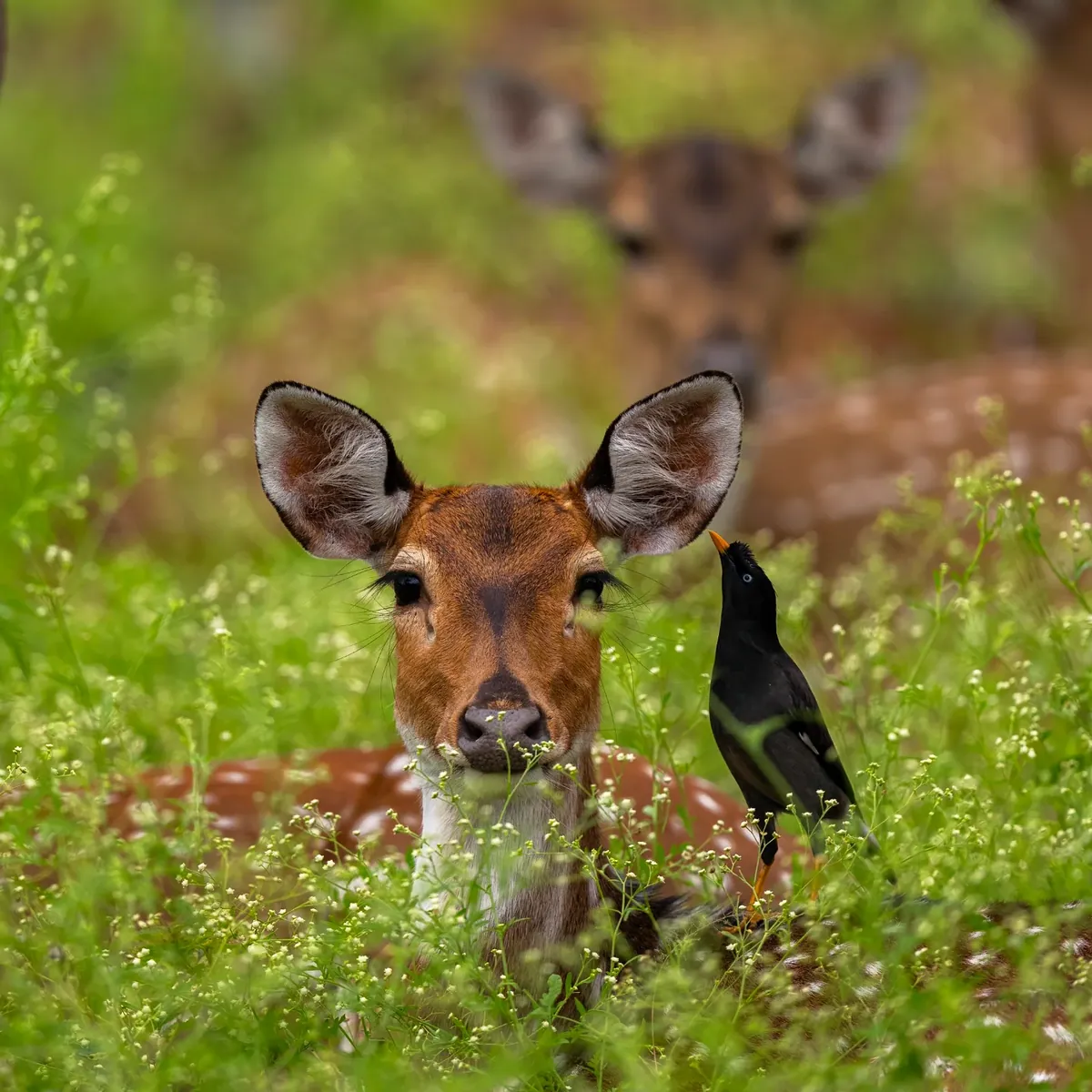
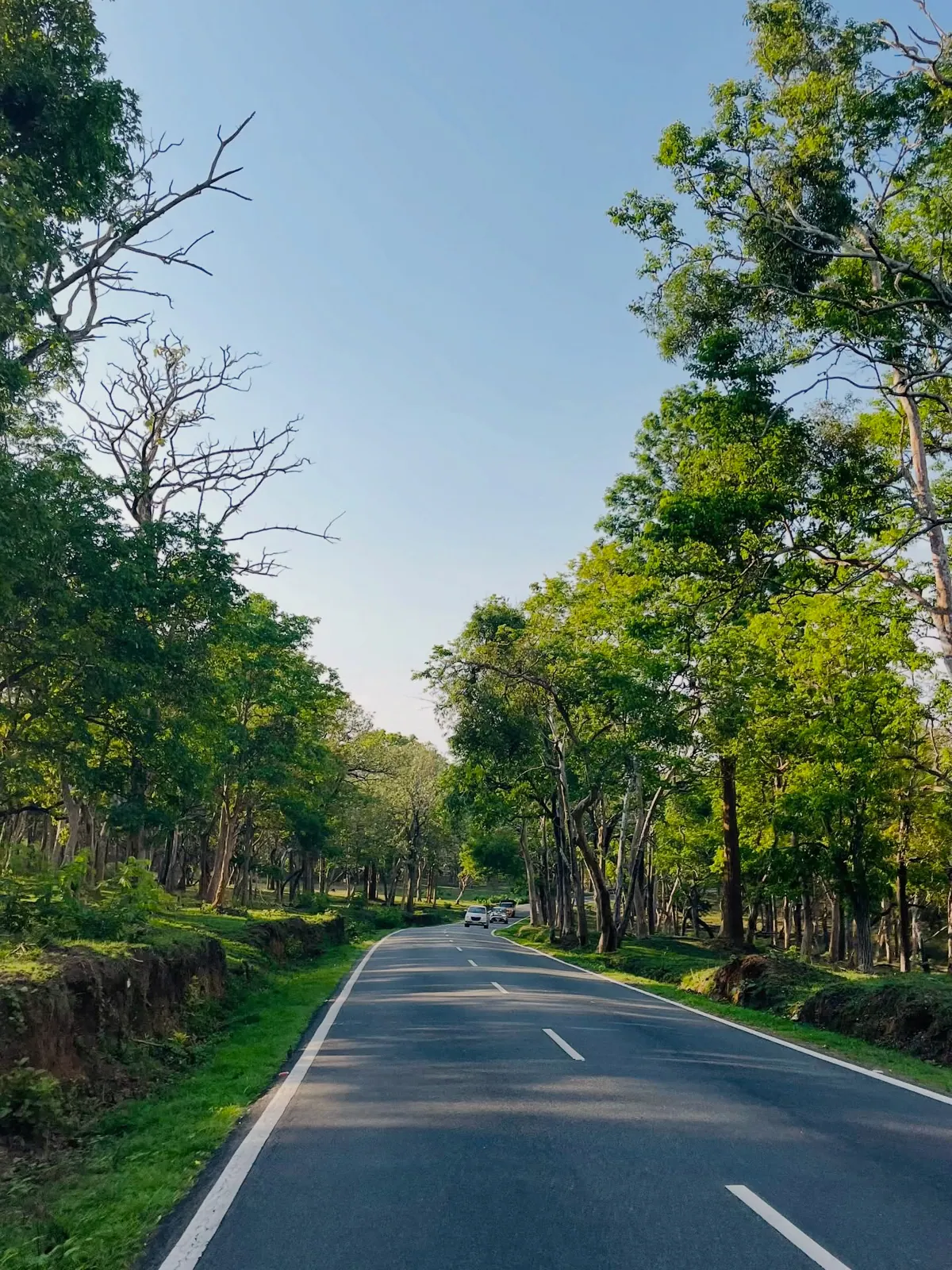
Where Karnataka’s forests descend towards the Nilgiri hills, the landscape begins to change almost imperceptibly. Highways narrow beneath spreading canopies, dry woodland gives way to greener valleys, and a sudden movement between the trees may reveal a herd of spotted deer, a solitary gaur or, if fortune allows, one of India’s most elusive predators. This is Bandipur—a wilderness shaped by more than its reputation for tiger sightings. Located across parts of Chamarajanagar and Mysuru districts, Bandipur National Park forms the core of the larger Bandipur Tiger Reserve. The National Tiger Conservation Authority lists the reserve at 1,456.3 sq. km, including 872.24 sq. km of core habitat and 584.06 sq. km of buffer. It is also an essential part of the Nilgiri Biosphere landscape, linking forests across Karnataka, Kerala and Tamil Nadu. For travellers, Bandipur is an accessible escape into the wild. For conservationists, it is something far more significant: a crucial piece of one of Asia’s great interconnected wildlife landscapes.
From Royal Hunting Ground to Tiger Stronghold

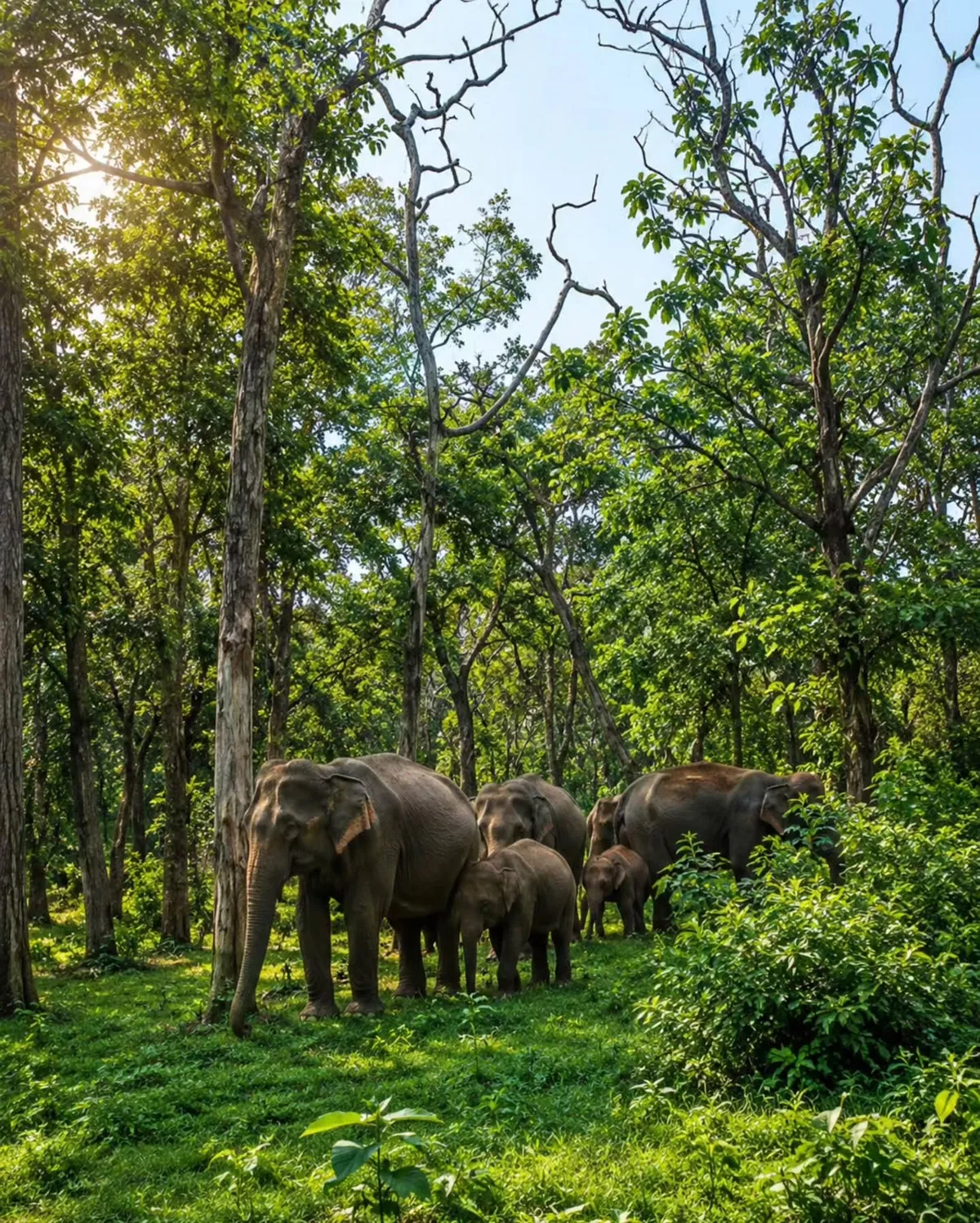
Bandipur’s conservation story stretches back to the Mysore royal era. The source material traces its beginnings to a 90 sq. km sanctuary known as Venugopala Wildlife Park, established under the erstwhile Mysore administration. Bandipur later became one of the pioneering reserves brought under Project Tiger in 1973, transforming a landscape once associated with royal hunting into one dedicated to protecting wildlife. That transformation mirrors a larger change in India’s relationship with its forests. Instead of viewing wilderness primarily as hunting territory or timber resource, protected areas such as Bandipur increasingly became refuges for threatened species and functioning ecosystems. Today, Bandipur’s importance extends well beyond its administrative boundaries. It connects with Nagarahole to the northwest, Mudumalai towards Tamil Nadu, Wayanad towards Kerala and the broader Sathyamangalam landscape. Together, these forests allow elephants, tigers and other wildlife to move across state borders—something essential for maintaining healthy populations over the long term.
Where Two Great Landscapes Meet
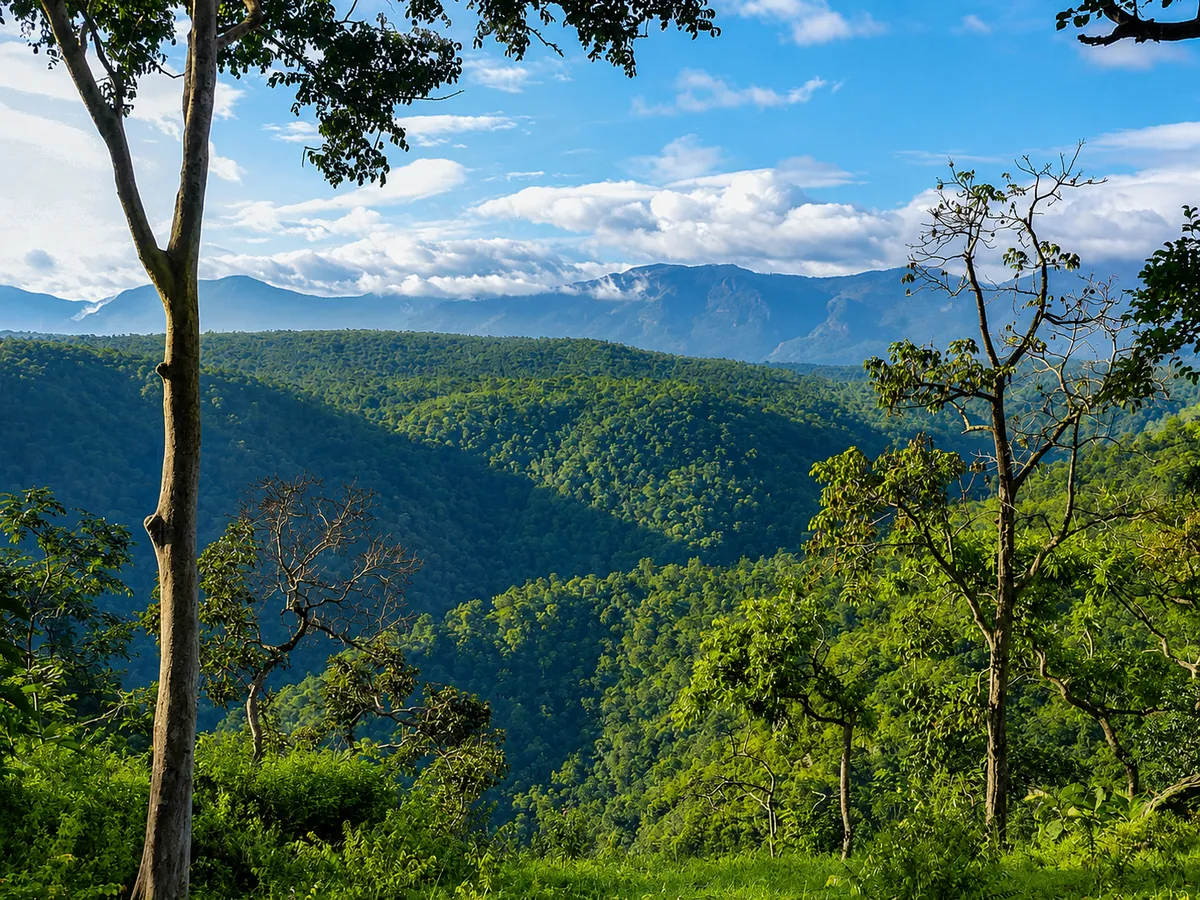
Bandipur occupies a remarkable geographical position around the transition between the Deccan Plateau and the Western Ghats. Its terrain rises from roughly 680 metres to more than 1,400 metres, producing a changing mosaic of dry deciduous forest, moist deciduous woodland, scrub and grass-dominated openings. The Kabini lies towards the north, the Moyar defines the southern landscape, while the Nugu flows through the region. This diversity is one reason the forest supports such abundant wildlife. Teak, rosewood, sandalwood, Indian kino, bamboo and Indian laurel are among the characteristic trees, joined by flowering and fruiting species such as flame-of-the-forest, golden shower, Indian gooseberry and black myrobalan. The seasons dramatically alter the mood of Bandipur. After the rains, the forest can appear dense and intensely green. As the dry months advance, vegetation thins, water becomes concentrated around fewer sources and the woodland turns shades of ochre, brown and dusty gold. For wildlife watchers, every season reveals a different forest.
A Kingdom of Tigers
& Elephants
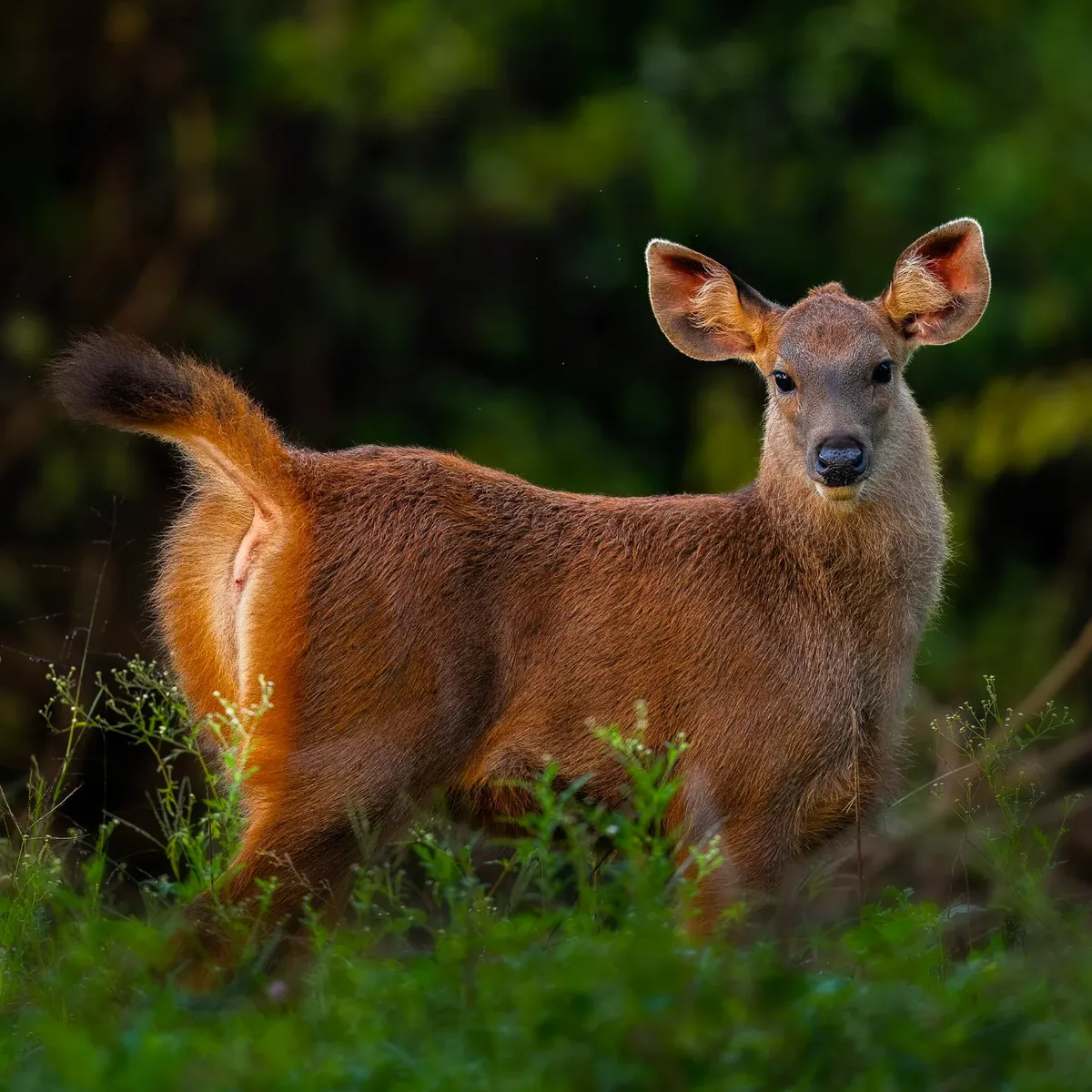
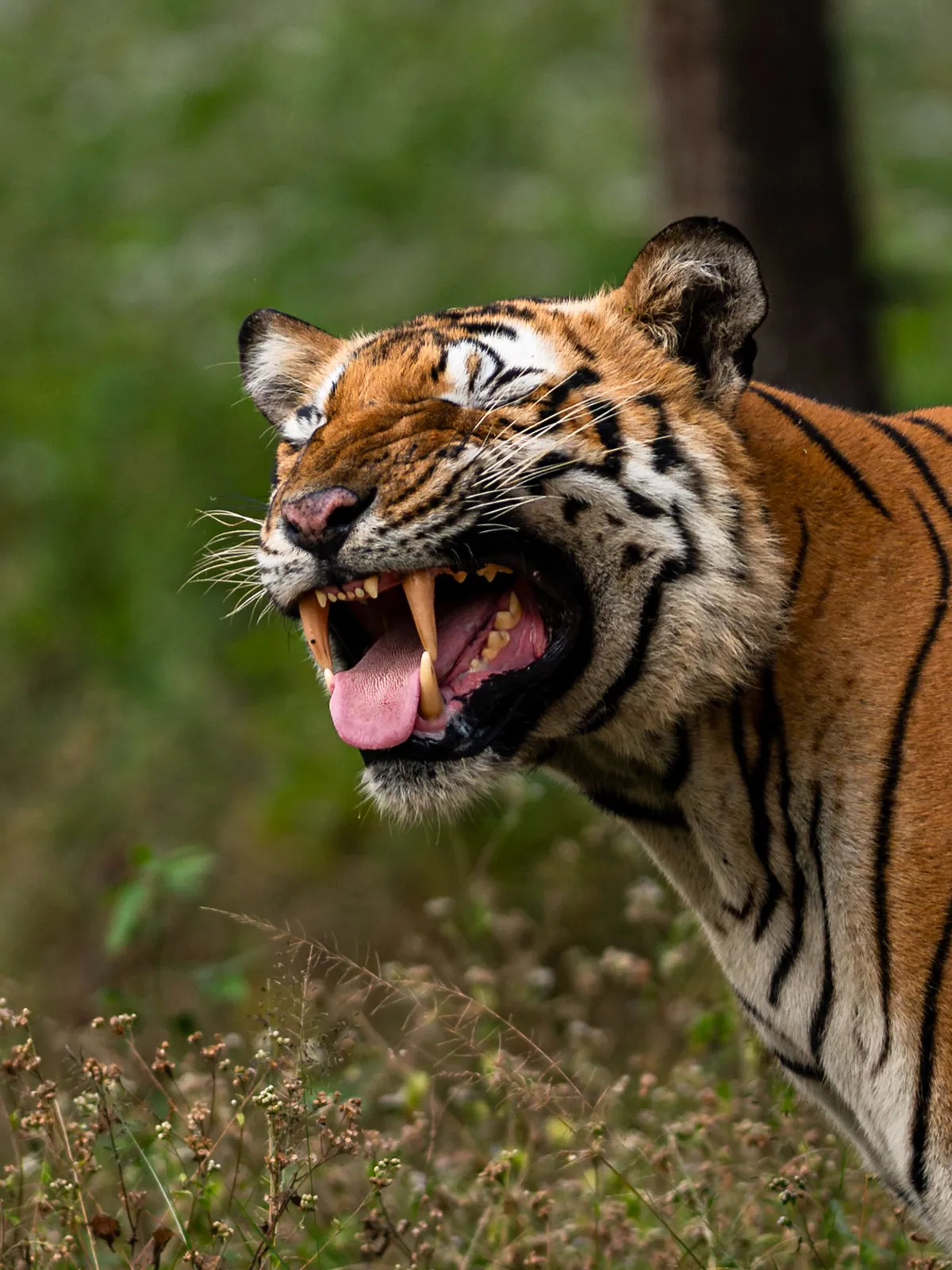
The Bengal tiger may be Bandipur’s most celebrated inhabitant, but it shares the forest with an extraordinary community of mammals. Asian elephants, leopards, gaur, dholes, sloth bears, sambar, chital, barking deer, wild boar, four-horned antelope, langurs and giant squirrels are all part of the ecosystem. Recent conservation assessments underline Bandipur’s significance. National Tiger Conservation Authority material based on the 2022 estimation reported 150 individual tigers identified in the reserve, with an estimated density of 9.50 tigers per 100 sq. km. The wider interconnected landscape is considered one of the world’s most important strongholds for wild tigers. Elephants are equally fundamental to Bandipur’s identity.
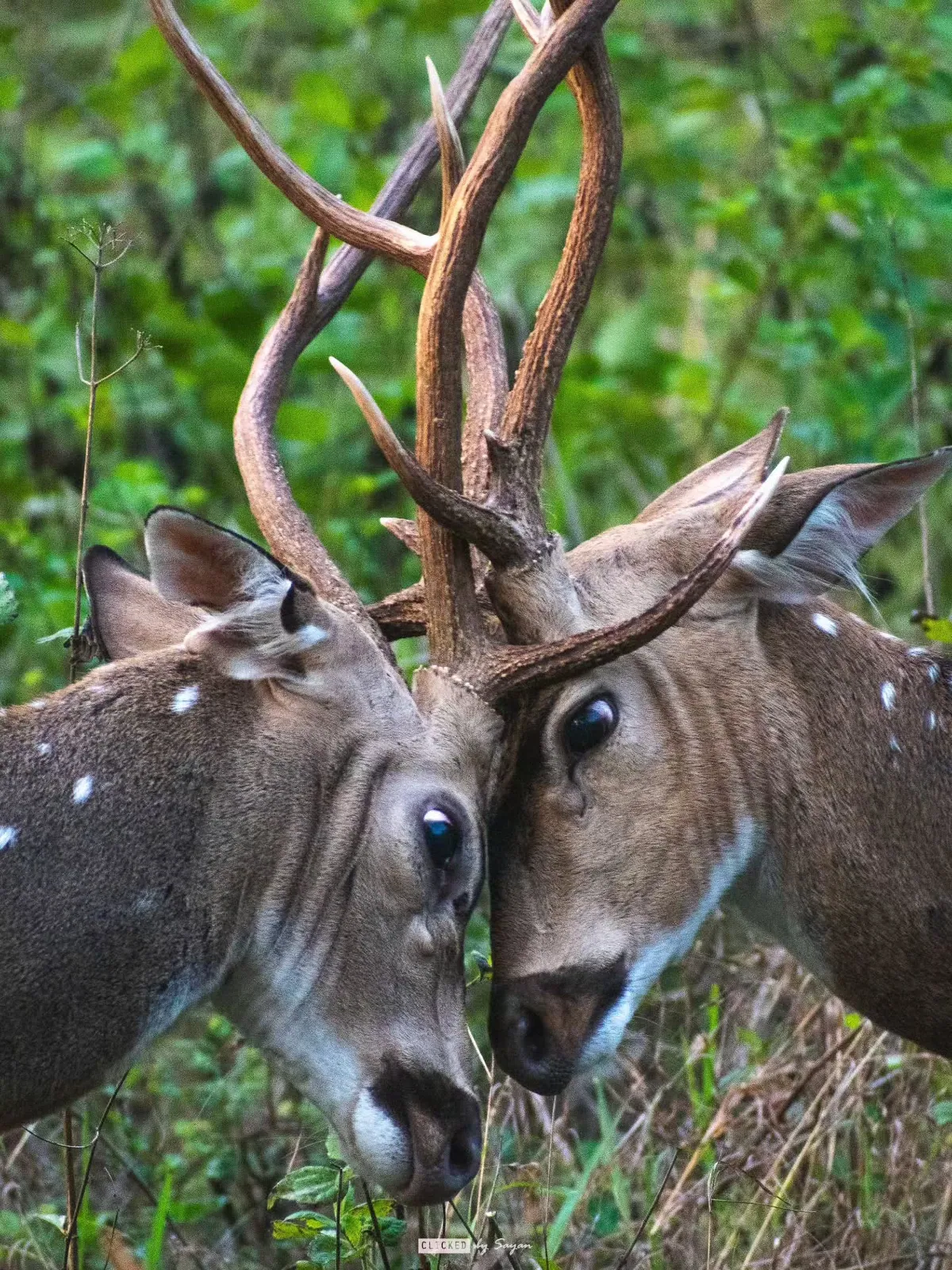
The reserve forms part of the Mysore Elephant Reserve and the larger Nilgiri landscape, which supports an exceptionally important Asian elephant population. Yet a visit to Bandipur quickly teaches an important lesson: the forest is not a zoo. A tiger may never appear. Instead, the morning might belong to a herd of elephants crossing between trees, a gaur standing motionless at the forest edge or spotted deer sounding an alarm call somewhere beyond sight. That unpredictability is precisely what makes the experience compelling.
Look Beyond the Big Cats
Bandipur rewards visitors who pay attention to smaller movements as much as dramatic sightings. The forest supports rich birdlife, with peafowl, junglefowl, kingfishers, bee-eaters, Indian rollers, owls and several birds of prey among the species associated with the landscape. The supplied material notes more than 200 bird species, while recent NTCA assessments record 289 species in the wider tiger reserve. Reptiles add another layer of biodiversity. Cobras, Indian rock pythons, monitor lizards, mugger crocodiles, rat snakes, terrapins and flying lizards inhabit different parts of the ecosystem. Butterflies and other invertebrates complete a biological network that is far more complex than the headline attraction of tiger tourism suggests. It is this diversity that makes Bandipur particularly rewarding for photographers and naturalists. A safari can shift within minutes from watching elephants to tracking a raptor overhead or observing langurs sounding warnings from the canopy.
The Safari Experience
A forest safari remains the classic way to experience Bandipur. Vehicles move through designated tourism zones rather than giving visitors unrestricted access to the reserve. Karnataka Tourism currently lists Forest Department minibus safaris and licensed jeep safaris, with excursions concentrated around the early morning and late afternoon when temperatures are lower and wildlife activity can be greater. The most memorable safaris, however, are rarely defined by a checklist. There is a distinctive pleasure in waiting. The vehicle stops. An alarm call travels through the trees. Everyone falls silent. Somewhere beyond the road, the forest seems to be communicating in a language visitors can only partially understand. Sometimes nothing emerges. Sometimes an elephant steps onto the track. And occasionally, a striped shape appears between the trees and an ordinary morning becomes unforgettable.
Above the Forest at Himavad Gopalaswamy Betta
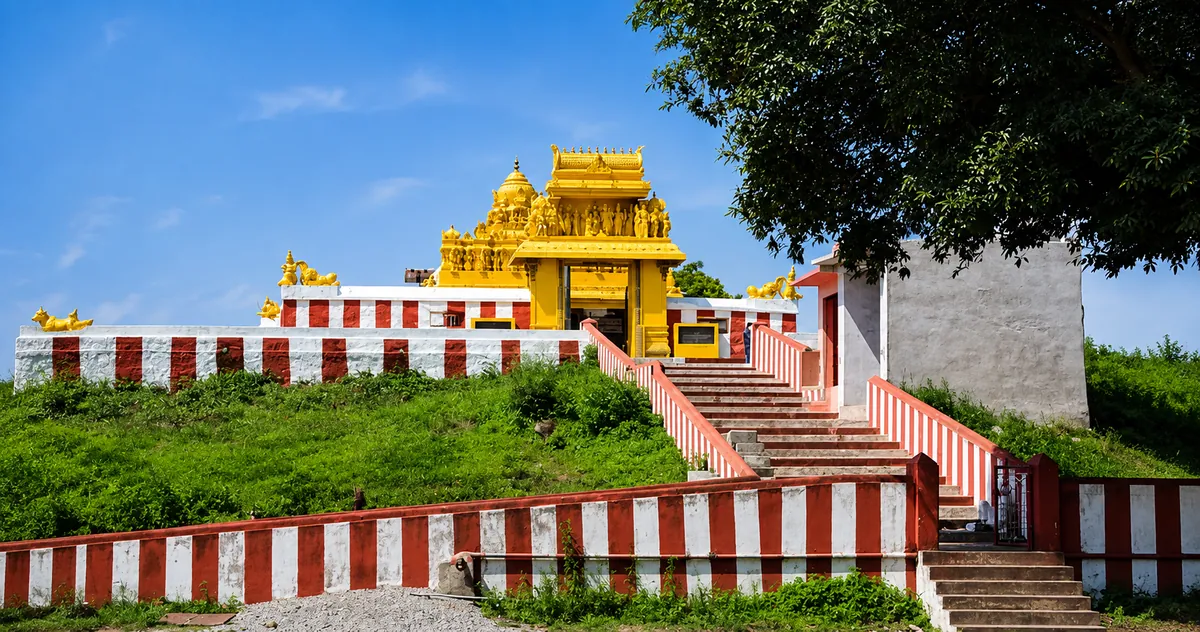
Bandipur’s appeal is not confined to safari tracks. Rising to roughly 1,450 metres, Himavad Gopalaswamy Betta is the highest point in the Bandipur landscape and offers a striking meeting of nature and spirituality. Its summit is known for drifting mist, sweeping views and the historic Gopalaswamy Temple dedicated to Krishna in his cowherd form. The journey upwards reveals how dramatically the landscape changes with elevation. Forest stretches towards distant ridges while clouds frequently sweep across the summit. Because the hill lies within a protected landscape, access is regulated. Visitors should check current Forest Department arrangements before travelling rather than relying on fixed historical timings.
Where Wilderness Meets Luxury
Instead, the morning might belong to a herd of elephants crossing between trees, a gaur standing motionless at the forest edge or spotted deer sounding an alarm call somewhere beyond sight.
The Serai Bandipur
Luxury on the Forest Fringe
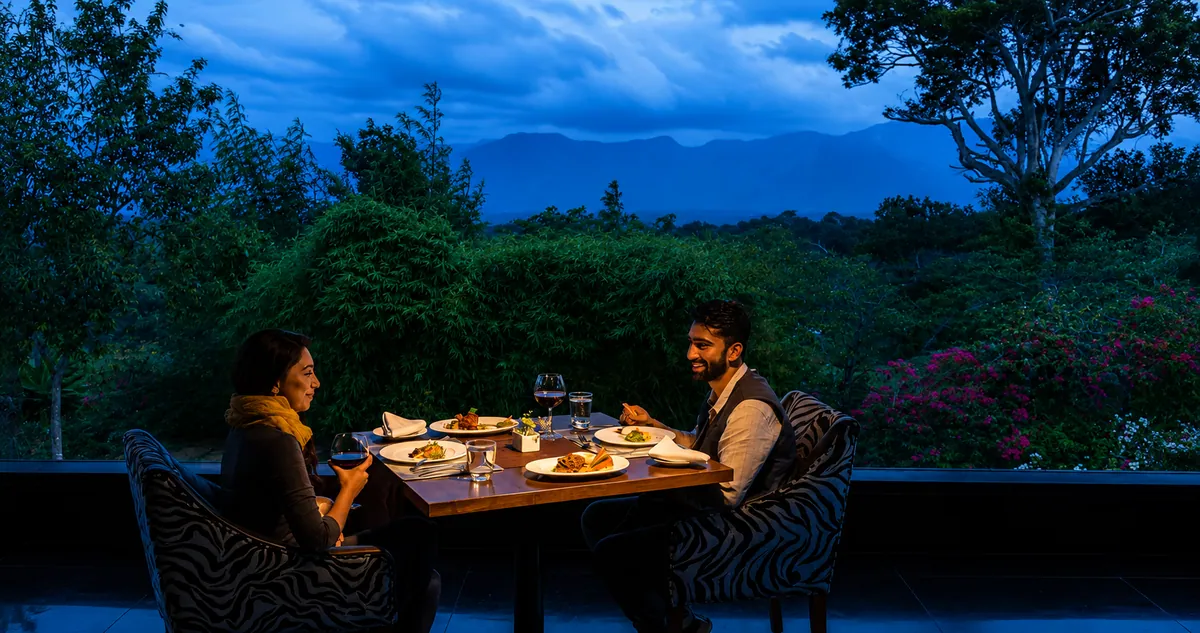
Set along the fringes of Bandipur’s forests, The Serai Bandipur brings together understated luxury and an unmistakable sense of wilderness. The property sits within Karnataka’s portion of the Nilgiri Biosphere landscape, close to a region where the Western and Eastern Ghats meet. According to the resort, the property comprises 24 luxury residences spread across its nature-rich setting. Its accommodation categories include Courtyard rooms, Log Huts and The Residence, creating options ranging from intimate escapes to more spacious stays. The surrounding forest remains the star attraction. Instead of separating guests from the landscape, the property has been designed to make the wilderness feel constantly present—a quality that makes it particularly appealing to couples, families, photographers and wildlife enthusiasts.
Dining & Wellness in the Wild
The Serai extends the experience beyond its rooms. Sanctuary, its restaurant, combines dining with views of the surrounding landscape, while Moyar’s Edge, the wilderness-themed bar, offers a relaxed setting after a day outdoors. For travellers who want to balance safari adventures with relaxation, the resort’s Oma Spa focuses on holistic wellness. Its therapies draw from Eastern and Western techniques and use botanical ingredients, while its signature collection includes treatments incorporating coffee from the group’s estates. Nature-focused experiences add another dimension to a stay. Bandipur safaris are naturally a major draw, but guests can also build their getaway around birdwatching, outdoor exploration and visits to nearby landscapes. It creates an appealing rhythm: an early morning in search of wildlife, a leisurely afternoon at the property and a quiet evening overlooking the wilderness.
The Windflower Bandipur
A Retreat Among the Nilgiris
For a different interpretation of forest luxury, The Windflower Resorts & Spa Bandipur places relaxation, adventure and wellness within a lush natural setting near Bandipur National Park. Accommodation includes Windflower Suites and Jungle Cottages. The latter use earthy tones and natural materials to complement their surroundings, with spacious interiors and private verandas overlooking dense vegetation. The resort also makes food part of the destination experience. Its restaurant combines local and global flavours, with the property highlighting regional and tribal-inspired cuisine alongside familiar South Indian and international dishes.
From Safari Mornings to Spa Afternoons
Adventure is balanced by wellness at Emerge Spa, The Windflower’s award-winning spa. Guests can choose from more than 20 Ayurvedic and other treatments, including Ayurvedic massage, hot-stone therapy and Abhyanga Sweda. There is plenty for active travellers too. Jungle safaris, birdwatching and nature walks connect visitors with Bandipur’s wildlife landscape, while yoga, swimming and recreational activities offer slower alternatives within the resort.
Planning a Bandipur Escape
The supplied travel material identifies October to May as a popular period for visiting, while the hotter months from March to May can concentrate wildlife around shrinking water sources. Sightings, however, are never guaranteed and vary with rainfall, vegetation and animal movement. Bandipur is particularly convenient as part of a road journey through southern Karnataka and the Nilgiris. Mysuru is roughly 80 km away, while Bengaluru is around 220 km by road. Ooty and the Mudumalai landscape can also be incorporated into a wider itinerary. Safari schedules, routes, access rules and fees can change, so travellers should verify current arrangements before departure.
More Than a Weekend in the Wild

Bandipur may initially attract visitors with the possibility of seeing a tiger, but its deeper appeal lies elsewhere. It is found in the sight of elephants disappearing silently into bamboo, the call of a peafowl carrying through a cool morning, the enormous silhouette of a gaur emerging from the trees and the sudden stillness that falls across a safari vehicle when an alarm call echoes through the forest. More importantly, Bandipur demonstrates what conservation can achieve when protected areas remain connected. From its beginnings as a royal-era sanctuary to its present role within one of Asia’s most important tiger and elephant landscapes, Bandipur has evolved into something larger than a national park. It is a living corridor between forests, species and states—and one of Karnataka’s most compelling reminders that the wildest journeys are often those in which nature, rather than the traveller, decides what happens next.