Nestled in the serene landscapes of Karnataka’s Hassan district, Halebeedu stands as a remarkable testament to India’s glorious architectural and cultural past. Once the flourishing capital of the mighty Hoysala Empire, this historic town continues to captivate historians, travellers, and art enthusiasts with its timeless charm. Though today it appears as a quiet settlement dotted with ancient ruins, Halebeedu echoes the grandeur of a bygone era when it was a thriving centre of power, art, and spirituality.
The very name “Halebeedu” translates to “old city,” a poignant reminder of its illustrious yet turbulent past. Originally known as Dwarasamudra, meaning “gateway to the seas,” the city once symbolized prosperity and strategic importance. Surrounded by water bodies and endowed with rich resources, it was an ideal location for a capital. During the 11th century, the Hoysala rulers established it, transforming it into a hub of political authority and cultural brilliance. Over time, the city blossomed into a vibrant centre where art, architecture, and religion flourished under royal patronage. The Hoysala Empire itself was one of the most influential dynasties in South India, rising to prominence in the 10th century. Known for their progressive outlook and immense support for the arts, the Hoysalas played a crucial role in shaping the region’s cultural identity. Their reign marked a golden age of temple construction, during which they developed a unique architectural style that set them apart from other dynasties. The use of soapstone, a soft yet durable material, allowed artisans to carve intricate details with astonishing precision, resulting in masterpieces that continue to inspire awe centuries later.

Halebeedu’s rise, however, was not without its challenges. Despite its prosperity, the city faced devastating invasions in the 14th century by forces of the Delhi Sultanate. These attacks led to the destruction of much of the city, reducing its once-grand structures to ruins. Yet, even in their damaged state, the remnants of Halebeedu’s temples and monuments continue to narrate stories of resilience, creativity, and devotion. They stand as silent witnesses to history, preserving the legacy of an empire that once ruled with splendour.
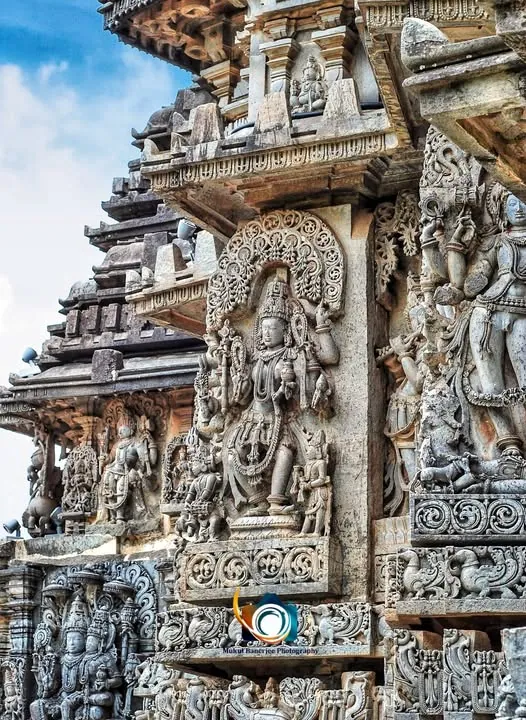
Among the many architectural wonders of Halebeedu, the Hoysaleswara Temple holds a place of paramount importance. Dedicated to Lord Shiva, this 12th-century temple is considered one of the finest examples of Hoysala architecture. Built on a distinctive star-shaped platform, the temple showcases the hallmark style of the dynasty. Every inch of its exterior walls is adorned with intricate carvings that depict scenes from Hindu epics such as the Ramayana and Mahabharata, along with images of deities, animals, and celestial beings.


What sets the Hoysaleswara Temple apart is the extraordinary level of detail in its sculptures. Each carving reflects the skill and dedication of the artisans who painstakingly worked on the stone, transforming it into a canvas of storytelling. The temple not only serves as a place of worship but also as a visual narrative of mythology, culture, and everyday life during the Hoysala period. Visitors often find themselves mesmerized by the sheer artistry, as every sculpture seems to come alive with expression and movement.


Another architectural gem in Halebeedu is the Kedareshwara Temple, also dedicated to Lord Shiva. Built during the reign of King Veera Ballala II, this temple exemplifies the elegance and refinement of Hoysala craftsmanship. Though smaller in size compared to the Hoysaleswara Temple, the Kedareshwara Temple possesses a unique charm characterized by its compact structure and serene atmosphere. Its ornate pillars, beautifully carved ceilings, and delicate sculptures highlight the artistic finesse of the era.

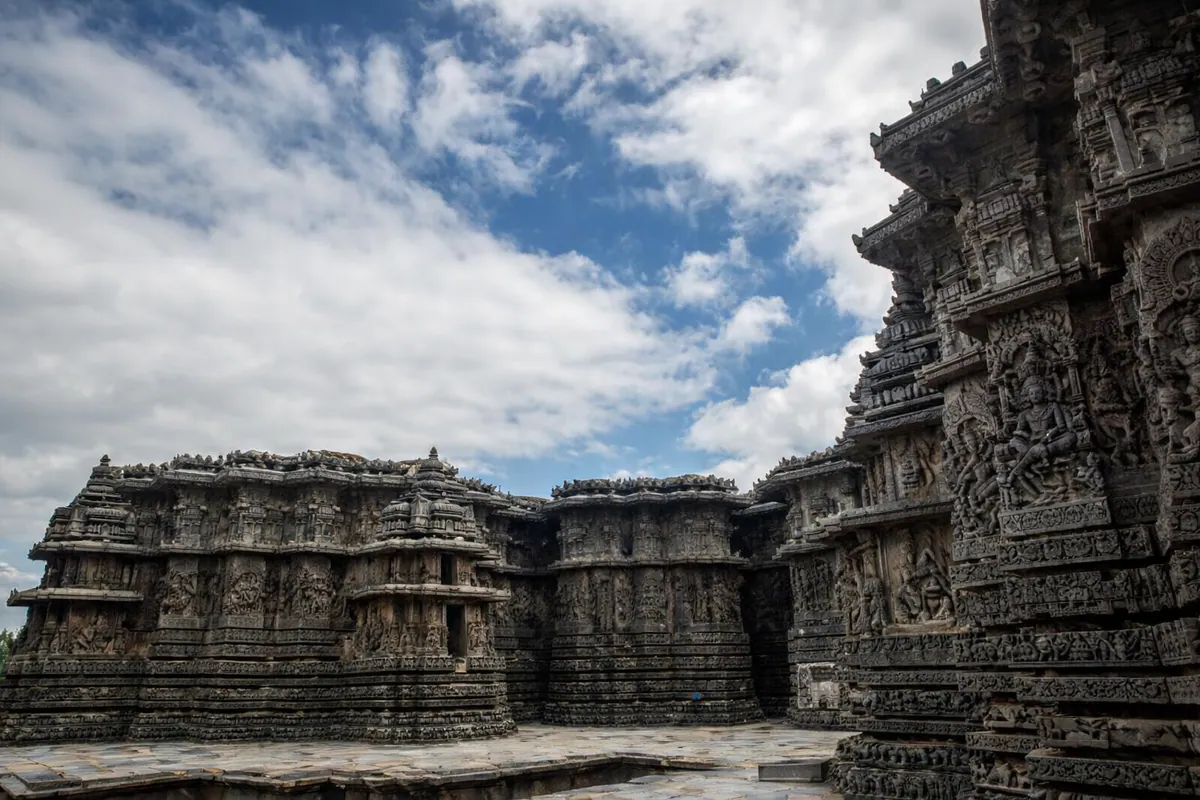
Unlike the grandeur of larger temples, the Kedareshwara Temple offers a more intimate experience, allowing visitors to appreciate the subtleties of Hoysala art. The temple’s preservation efforts in recent years have ensured that its beauty continues to endure, providing future generations with a glimpse into the architectural brilliance of the past. It stands as a symbol of the meticulous attention to detail that defined Hoysala artistry.

The temple’s preservation efforts in recent years have ensured that its beauty continues to endure, providing future generations with a glimpse into the architectural brilliance of the past.
Halebeedu is not only a centre of Hindu temple architecture but also a reflection of religious harmony. The town is home to a group of Jain temples, commonly referred to as Basadis, including the Parshvanatha, Shantinatha, and Adinatha temples. These Jain monuments add another dimension to Halebeedu’s cultural landscape, showcasing the coexistence of diverse religious traditions during the Hoysala period.
The Jain Basadis are known for their understated elegance. Unlike the elaborate carvings seen in Hindu temples, these structures emphasize simplicity and spiritual focus. The sculptures of Tirthankaras within these temples are crafted with precision, reflecting a deep sense of devotion and tranquillity. Despite their minimalistic design, the Basadis demonstrate the same level of craftsmanship and artistic excellence that characterizes Hoysala architecture.
Beyond their architectural significance, the temples of Halebeedu serve as valuable cultural archives. The intricate carvings and friezes found on temple walls provide insights into the social and cultural life of ancient India. Scenes depicting royal processions, dancers, musicians, and daily activities offer a vivid glimpse into the lifestyle of the time. These artistic representations highlight the importance of art and culture in the Hoysala kingdom, where creativity was celebrated and nurtured.
Nature also played a significant role in Hoysala art, as evident in the detailed depictions of animals, plants, and natural elements. The sculptures often portray elephants, horses, lions, and birds with remarkable realism, symbolizing strength, grace, and harmony with the natural world. This deep connection to nature reflects the holistic worldview of the Hoysalas, who saw art as an expression of both spiritual and earthly beauty.
The legacy of Halebeedu extends beyond its monuments. It represents a period in Indian history when architecture, religion, and culture were deeply intertwined. The temples were not merely places of worship; they were centers of learning, music, and community gatherings. They played a vital role in fostering a sense of identity and continuity, connecting people to their heritage and traditions.
Today, Halebeedu continues to attract visitors from across the world, drawn by its historical significance and artistic splendor. Walking through its ancient ruins, one can almost hear the echoes of a glorious past—of kings and artisans, of devotion and creativity. The town serves as a reminder of the enduring power of art and architecture to transcend time, preserving the essence of a civilization long after it has faded. Efforts to conserve and protect Halebeedu’s monuments are crucial in ensuring that this heritage remains intact. As modernization continues to reshape the world, sites like Halebeedu offer a valuable link to history, allowing us to understand and appreciate the achievements of our ancestors. They inspire us to preserve our cultural legacy and pass it on to future generations. In conclusion, Halebeedu is much more than an ancient city; it is a living testament to the grandeur of the Hoysala Empire. Its temples, sculptures, and ruins tell a story of artistic excellence, spiritual devotion, and cultural richness. Despite the passage of time and the challenges it has faced, Halebeedu continues to stand as a beacon of India’s architectural heritage. Exploring this historic town is not just a journey through stone and sculpture—it is a journey through history itself, where every carving whispers tales of a magnificent past.